This table comes from the joint table in the app. The assistant reads the same table.
Each joint has its UK name first, and other names (US names first) under Also called.
Strength in its family is low, medium or high against the other joints in the same family, with the reason. It is not a measured strength.
Looks tells you if the joint is shown, partly shown or hidden, and on which faces.
KerfCraft draws it tells you if Add joint… can add the joint. See Add joints.
The proportions are typical starting points: check them against your own design before cutting.
To learn how to choose between joints, read Choosing a joint.
Frame joints
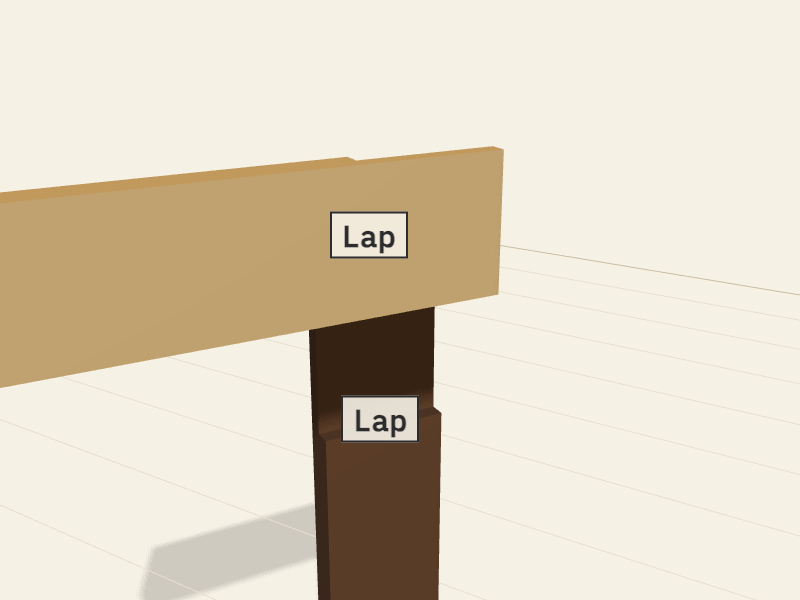
Corner half lap
| Also called | end lap, corner halving |
|---|
| Use | Frame corners: simple frames, carcass back frames, workshop jigs. |
|---|
| Loads it resists | shear, twist |
|---|
| Strength in its family | medium: A large long-grain glue face, but each part is cut to half its thickness. |
|---|
| Difficulty | beginner |
|---|
| Tools | hand, power, CNC |
|---|
| Glue surface | long grain |
|---|
| Wood movement | The grain of the two parts crosses. Keep glued cross-grain joints narrow, or the wood can split as it moves. |
|---|
| Typical proportions | Each part cut to ½ of its thickness, the width of the other part long. |
|---|
| Looks | shown, on the side, end |
|---|
| Decorative options | none |
|---|
| KerfCraft draws it | yes, with Add joint… ▸ Half lap |
|---|
Tee half lap
| Also called | T-lap, tee halving |
|---|
| Use | A rail meeting the middle of another rail in a frame. |
|---|
| Loads it resists | shear, twist |
|---|
| Strength in its family | medium: A large long-grain glue face, but each part is cut to half its thickness. |
|---|
| Difficulty | beginner |
|---|
| Tools | hand, power, CNC |
|---|
| Glue surface | long grain |
|---|
| Wood movement | The grain of the two parts crosses. Keep glued cross-grain joints narrow, or the wood can split as it moves. |
|---|
| Typical proportions | Each part cut to ½ of its thickness. |
|---|
| Looks | shown, on the side |
|---|
| Decorative options | none |
|---|
| KerfCraft draws it | yes, with Add joint… ▸ Half lap |
|---|
Cross half lap
| Also called | cross lap, cross halving |
|---|
| Use | Two rails that cross: stretchers, lattices, grids. |
|---|
| Loads it resists | shear, twist |
|---|
| Strength in its family | medium: Long-grain glue faces, and each part holds the other on four shoulders. |
|---|
| Difficulty | beginner |
|---|
| Tools | hand, power, CNC |
|---|
| Glue surface | long grain |
|---|
| Wood movement | The grain of the two parts crosses. Keep glued cross-grain joints narrow, or the wood can split as it moves. |
|---|
| Typical proportions | Each part cut to ½ of its thickness, the width of the other part wide. |
|---|
| Looks | shown, on the top |
|---|
| Decorative options | none |
|---|
| KerfCraft draws it | yes, with Add joint… ▸ Half lap |
|---|
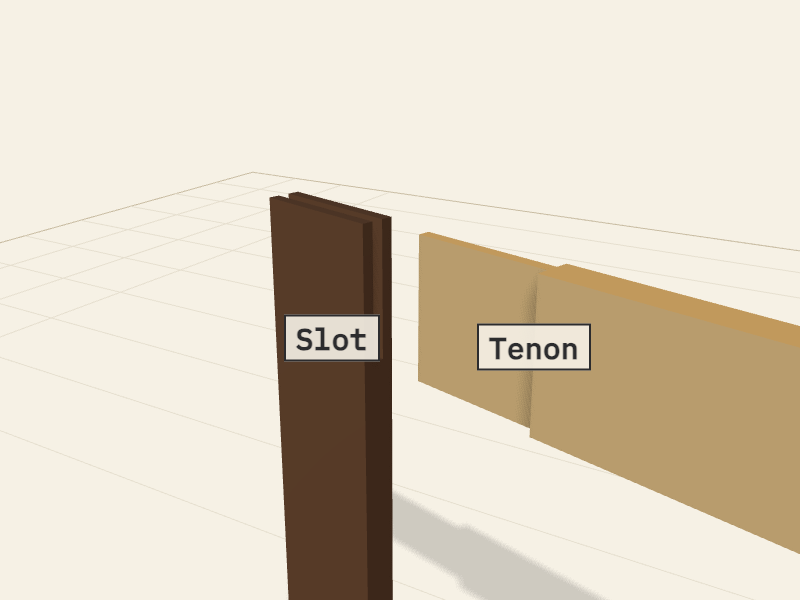
Corner bridle
| Also called | open mortise and tenon, slot mortise |
|---|
| Use | Frame corners, door frames, table bases where a leg meets a top rail. |
|---|
| Loads it resists | racking, shear |
|---|
| Strength in its family | medium: Three long-grain glue faces, but the slot is open on two sides, so it resists racking less than a mortise and tenon. |
|---|
| Difficulty | intermediate |
|---|
| Tools | hand, power, CNC |
|---|
| Glue surface | long grain |
|---|
| Wood movement | The grain of the two parts crosses. Keep glued cross-grain joints narrow, or the wood can split as it moves. |
|---|
| Typical proportions | Tenon and slot each about ⅓ of the stock thickness. |
|---|
| Looks | shown, on the side, end |
|---|
| Decorative options | a peg through the cheeks |
|---|
| KerfCraft draws it | yes, with Add joint… ▸ Bridle |
|---|
Tee bridle
| Also called | T-bridle |
|---|
| Use | A leg or upright meeting the middle of a rail. |
|---|
| Loads it resists | racking, shear |
|---|
| Strength in its family | medium: Three long-grain glue faces, and the rail is held on both sides. |
|---|
| Difficulty | intermediate |
|---|
| Tools | hand, power, CNC |
|---|
| Glue surface | long grain |
|---|
| Wood movement | The grain of the two parts crosses. Keep glued cross-grain joints narrow, or the wood can split as it moves. |
|---|
| Typical proportions | Slot about ⅓ of the stock thickness; the housing in the rail is the full width of the slotted part. |
|---|
| Looks | shown, on the side, end |
|---|
| Decorative options | none |
|---|
| KerfCraft draws it | yes, with Add joint… ▸ Bridle |
|---|
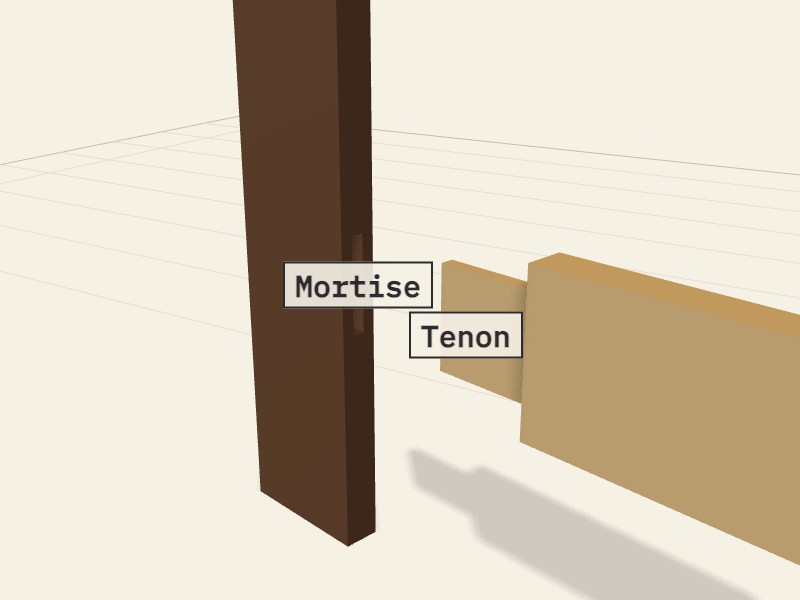
Blind mortise and tenon
| Also called | stopped mortise and tenon, stopped tenon |
|---|
| Use | The standard frame joint: rails into legs, doors, chairs, tables. |
|---|
| Loads it resists | racking, shear, twist |
|---|
| Strength in its family | high: Long-grain glue faces on the cheeks, and the shoulders resist racking. |
|---|
| Difficulty | intermediate |
|---|
| Tools | hand, power, CNC |
|---|
| Glue surface | long grain |
|---|
| Wood movement | The grain of the two parts crosses. Keep glued cross-grain joints narrow, or the wood can split as it moves. |
|---|
| Typical proportions | Tenon about ⅓ of the stock thickness; length about ⅔ of the width of the mortised part. |
|---|
| Looks | hidden |
|---|
| Decorative options | none |
|---|
| KerfCraft draws it | yes, with Add joint… ▸ Mortise and tenon |
|---|
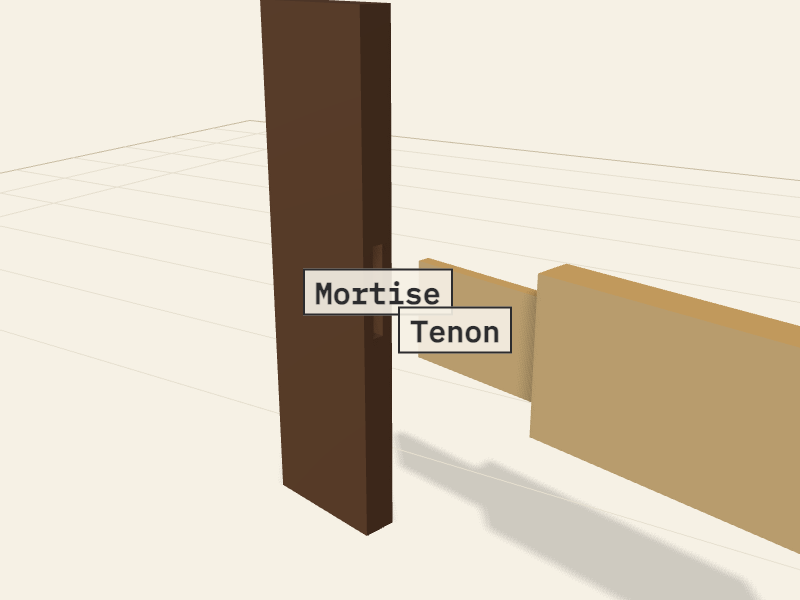
Through mortise and tenon
| Also called | through tenon |
|---|
| Use | Frames where the tenon end can show, or must be wedged. |
|---|
| Loads it resists | racking, shear, twist |
|---|
| Strength in its family | high: The full length of the cheeks gives long-grain glue face. |
|---|
| Difficulty | intermediate |
|---|
| Tools | hand, power, CNC |
|---|
| Glue surface | long grain |
|---|
| Wood movement | The grain of the two parts crosses. Keep glued cross-grain joints narrow, or the wood can split as it moves. |
|---|
| Typical proportions | Tenon about ⅓ of the stock thickness, through the mortised part. |
|---|
| Looks | shown, on the side |
|---|
| Decorative options | the tenon end left a little proud and chamfered |
|---|
| KerfCraft draws it | yes, with Add joint… ▸ Through mortise and tenon |
|---|
Haunched mortise and tenon
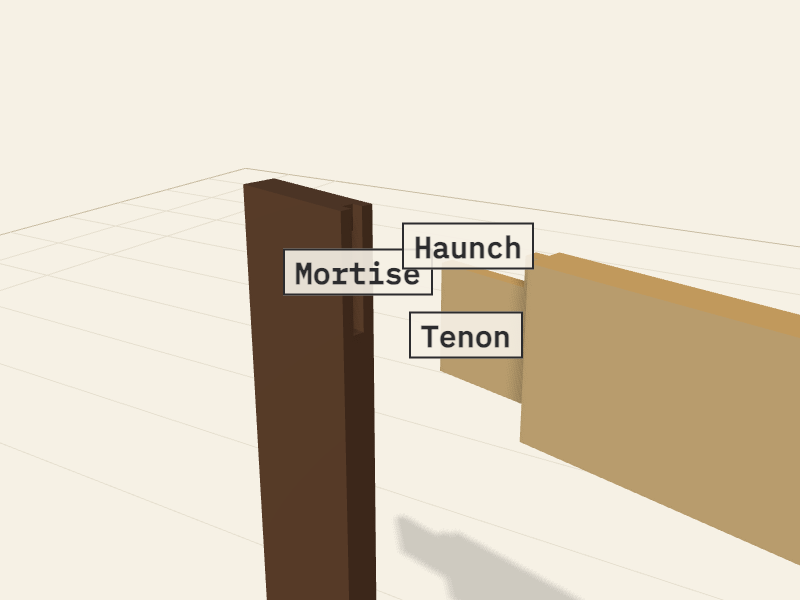
| Also called | haunched tenon |
|---|
| Use | Frame-and-panel doors and frames with a groove: the haunch fills the groove at the corner. |
|---|
| Loads it resists | racking, shear, twist |
|---|
| Strength in its family | high: The haunch adds glue face and resists twist in a wide rail. |
|---|
| Difficulty | advanced |
|---|
| Tools | hand, power, CNC |
|---|
| Glue surface | long grain |
|---|
| Wood movement | Glue the frame only; leave a solid panel loose in its groove so it can move. |
|---|
| Typical proportions | Tenon about ⅓ of the stock thickness; haunch as long as the groove is deep. |
|---|
| Looks | hidden |
|---|
| Decorative options | none |
|---|
| KerfCraft draws it | yes, with Add joint… ▸ Haunched mortise and tenon |
|---|
Through wedged tenon
| Also called | wedged mortise and tenon, wedged through tenon |
|---|
| Use | Frames that must not pull apart (chairs, benches, trestles), and where the wedges are a feature. |
|---|
| Loads it resists | pull-out, racking, shear |
|---|
| Strength in its family | high: The wedges spread the tenon into a flared mortise: a mechanical lock against pull-out. |
|---|
| Difficulty | advanced |
|---|
| Tools | hand |
|---|
| Glue surface | long grain |
|---|
| Wood movement | Drive the wedges so they spread the tenon towards the mortise ends, not its long sides, or the mortised part can split. |
|---|
| Typical proportions | Tenon about ⅓ of the stock thickness; flare the mortise on the outside face for the wedges. |
|---|
| Looks | shown, on the side |
|---|
| Decorative options | contrasting wood for the wedges |
|---|
| KerfCraft draws it | not yet |
|---|
Drawbored mortise and tenon
| Also called | pegged tenon, pegged mortise and tenon |
|---|
| Use | Frames, doors and timber framing that must stay tight, with or without glue. |
|---|
| Loads it resists | pull-out, racking, shear |
|---|
| Strength in its family | high: The offset peg pulls the shoulders tight and holds the tenon in against pull-out. |
|---|
| Difficulty | advanced |
|---|
| Tools | hand |
|---|
| Glue surface | long grain |
|---|
| Wood movement | The grain of the two parts crosses. Keep glued cross-grain joints narrow, or the wood can split as it moves. |
|---|
| Typical proportions | Peg hole in the tenon offset about 1–2 mm towards the shoulder. |
|---|
| Looks | shown, on the side |
|---|
| Decorative options | contrasting or square pegs, pegs left proud and rounded |
|---|
| KerfCraft draws it | not yet |
|---|
Twin mortise and tenon
| Also called | double tenon, twin tenon |
|---|
| Use | Thick or wide rails, for example a drawer rail into a leg or a deep door rail. |
|---|
| Loads it resists | racking, shear, twist |
|---|
| Strength in its family | high: Two tenons give more long-grain glue face than one, without one wide tenon that shrinks. |
|---|
| Difficulty | advanced |
|---|
| Tools | hand, power, CNC |
|---|
| Glue surface | long grain |
|---|
| Wood movement | Two narrow tenons move less across their width than one wide tenon. |
|---|
| Typical proportions | Each tenon about ⅓ of its own stock; the space between equals a tenon. |
|---|
| Looks | hidden |
|---|
| Decorative options | none |
|---|
| KerfCraft draws it | not yet |
|---|
Scarf joint
| Also called | scarf |
|---|
| Use | Joining two lengths end to end to make a longer member. |
|---|
| Loads it resists | shear, pull-out |
|---|
| Strength in its family | low: A plain glued scarf depends on its slope: a long, shallow slope gives more glue face. |
|---|
| Difficulty | advanced |
|---|
| Tools | hand, power, CNC |
|---|
| Glue surface | long grain |
|---|
| Wood movement | Parts meet with their grain in the same direction, so they move together. |
|---|
| Typical proportions | A long, shallow slope (about 1:8 or flatter) for a plain glued scarf. |
|---|
| Looks | shown, on the side, top |
|---|
| Decorative options | keyed or pegged scarfs in traditional framing |
|---|
| KerfCraft draws it | not yet |
|---|
Carcass and box joints
Glued butt joint
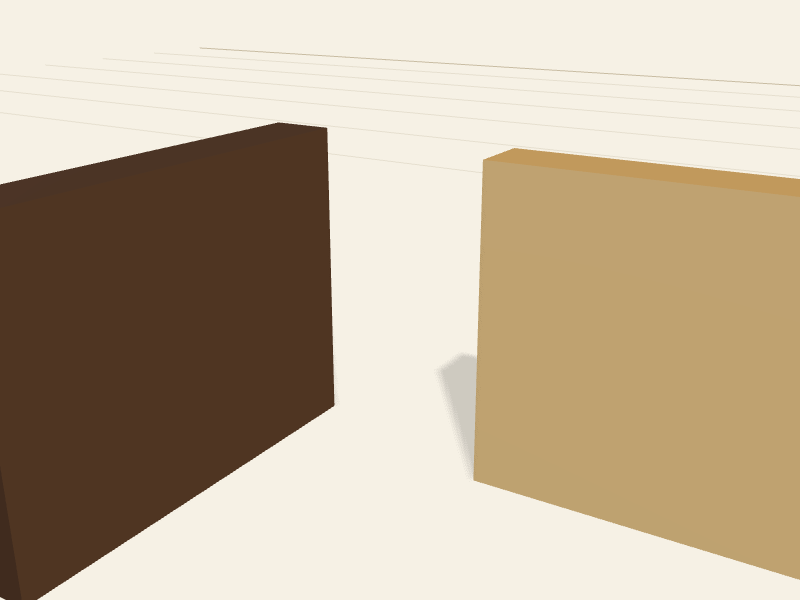
| Also called | butt joint |
|---|
| Use | The simplest corner or tee: one part glued against the face or edge of another. |
|---|
| Loads it resists | shear |
|---|
| Strength in its family | low: End grain glues poorly and nothing locks the parts. |
|---|
| Difficulty | beginner |
|---|
| Tools | hand, power, CNC |
|---|
| Glue surface | end grain |
|---|
| Wood movement | Weak where wide parts cross grain; the glue line can fail as they move. |
|---|
| Typical proportions | Cut the ends square and flat; no joint to mark out. |
|---|
| Looks | shown, on the side |
|---|
| Decorative options | none |
|---|
| KerfCraft draws it | yes, with Add joint… ▸ Glued butt |
|---|
Rebate joint
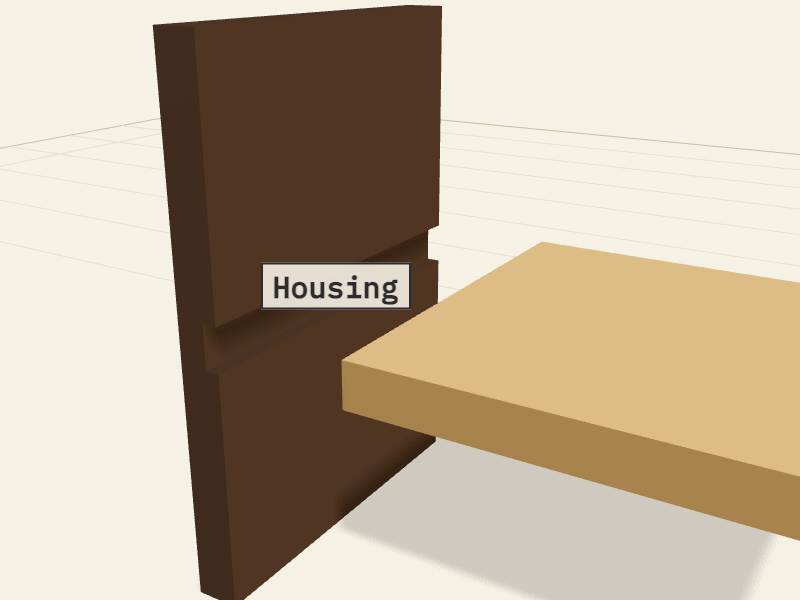
| Also called | rabbet joint |
|---|
| Use | Box and carcass corners, and backs let into a carcass. |
|---|
| Loads it resists | shear, racking |
|---|
| Strength in its family | low: The shoulder locates the part and adds some long-grain glue face, but the main glue face is end grain. |
|---|
| Difficulty | beginner |
|---|
| Tools | hand, power, CNC |
|---|
| Glue surface | mixed |
|---|
| Wood movement | A back in a rebate can be screwed, not glued, so a solid-wood back can move. |
|---|
| Typical proportions | Rebate about ½ of the thickness of the part it is cut in. |
|---|
| Looks | partly shown, on the side |
|---|
| Decorative options | none |
|---|
| KerfCraft draws it | yes, with Add joint… ▸ Housing |
|---|
Through housing
| Also called | dado, through dado, trench |
|---|
| Use | Fixed shelves and dividers into carcass sides. |
|---|
| Loads it resists | shear |
|---|
| Strength in its family | medium: The shelf sits on the housing shoulder, so the load does not hang on the glue. |
|---|
| Difficulty | beginner |
|---|
| Tools | hand, power, CNC |
|---|
| Glue surface | end grain |
|---|
| Wood movement | Shelf and side grain run the same way in a carcass, so they move together. |
|---|
| Typical proportions | Housing about ⅓ of the side thickness deep, the full width of the shelf. |
|---|
| Looks | partly shown, on the front |
|---|
| Decorative options | none |
|---|
| KerfCraft draws it | yes, with Add joint… ▸ Housing |
|---|
Stopped housing
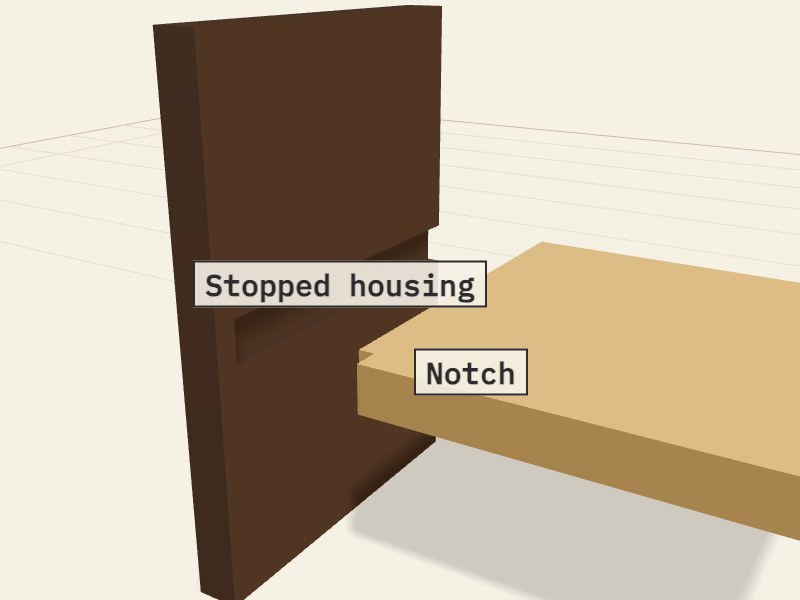
| Also called | stopped dado, blind dado |
|---|
| Use | Shelves into sides where the front edge must look clean. |
|---|
| Loads it resists | shear |
|---|
| Strength in its family | medium: The same shoulder as a through housing, with a little less glue face. |
|---|
| Difficulty | intermediate |
|---|
| Tools | hand, power, CNC |
|---|
| Glue surface | end grain |
|---|
| Wood movement | Shelf and side grain run the same way in a carcass, so they move together. |
|---|
| Typical proportions | Housing about ⅓ of the side thickness deep; stop it short of the front edge and notch the shelf to suit. |
|---|
| Looks | hidden |
|---|
| Decorative options | none |
|---|
| KerfCraft draws it | yes, with Add joint… ▸ Stopped housing |
|---|
Mitre joint
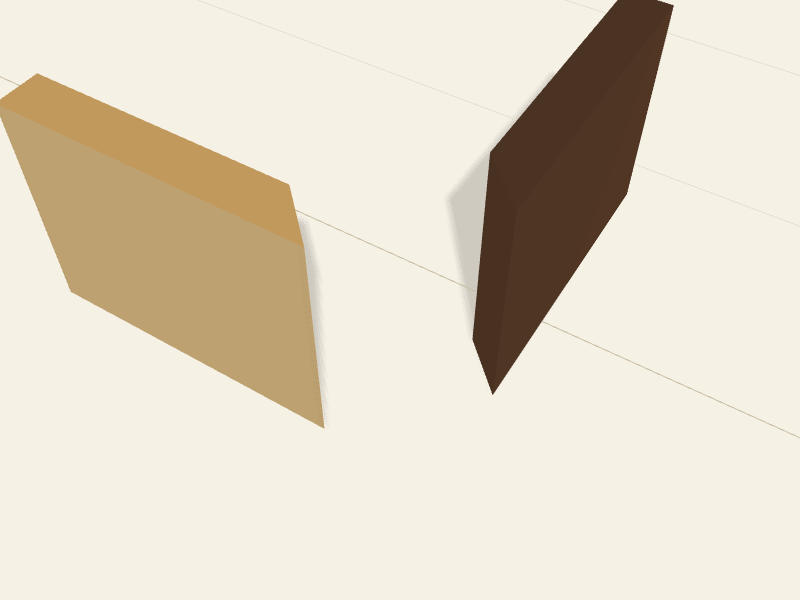
| Also called | miter joint, plain mitre |
|---|
| Use | Corners where no end grain must show: picture frames, boxes, mouldings. |
|---|
| Loads it resists | shear |
|---|
| Strength in its family | low: Both glue faces are end grain and nothing locks the parts. |
|---|
| Difficulty | intermediate |
|---|
| Tools | hand, power, CNC |
|---|
| Glue surface | end grain |
|---|
| Wood movement | On wide parts the mitre opens or closes as the wood moves across its width. |
|---|
| Typical proportions | Two cuts at half the corner angle (45° for a square corner). |
|---|
| Looks | hidden |
|---|
| Decorative options | none |
|---|
| KerfCraft draws it | yes, with Add joint… ▸ Mitre |
|---|
Splined mitre
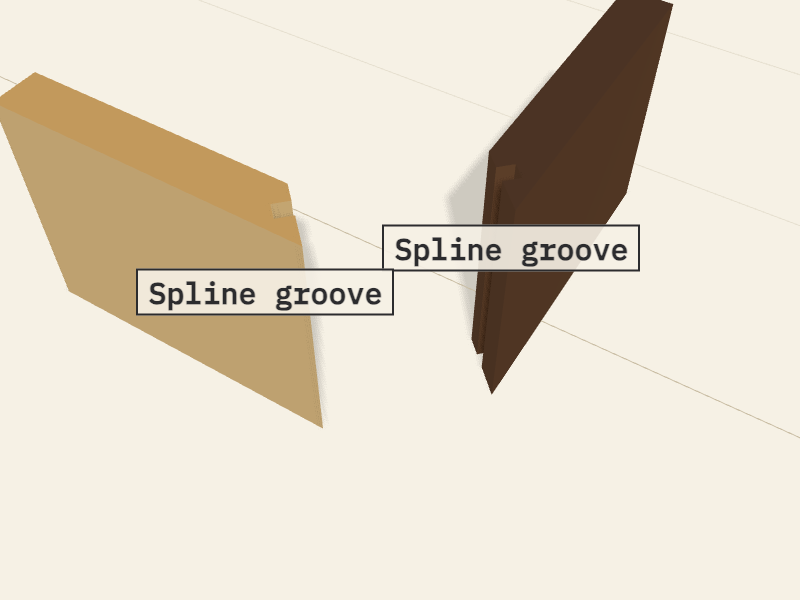
| Also called | spline miter, loose-tongue mitre |
|---|
| Use | Long mitred corners in carcasses and boxes that need more strength than a plain mitre. |
|---|
| Loads it resists | shear, pull-out |
|---|
| Strength in its family | medium: The spline adds long-grain glue face and keeps the faces level. |
|---|
| Difficulty | intermediate |
|---|
| Tools | hand, power, CNC |
|---|
| Glue surface | mixed |
|---|
| Wood movement | Cut a solid-wood spline with its grain across the joint, or use plywood, so it does not split. |
|---|
| Typical proportions | Spline about ⅓ of the stock thickness, nearer the inside corner. |
|---|
| Looks | partly shown, on the end |
|---|
| Decorative options | a contrasting spline that shows at the ends, stopped grooves to hide it |
|---|
| KerfCraft draws it | yes, with Add joint… ▸ Splined mitre |
|---|
Keyed mitre
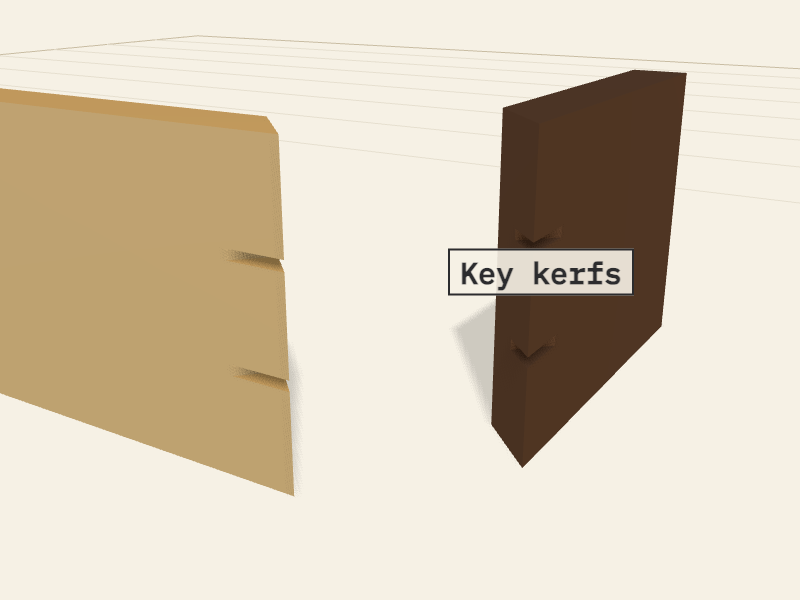
| Also called | key miter, feathered mitre |
|---|
| Use | Box and frame corners: keys across the corner add strength and are often a feature. |
|---|
| Loads it resists | shear, pull-out |
|---|
| Strength in its family | medium: The keys cross the joint with long-grain glue faces. |
|---|
| Difficulty | intermediate |
|---|
| Tools | hand, power, CNC |
|---|
| Glue surface | mixed |
|---|
| Wood movement | Small parts only; keys have their grain across the joint line. |
|---|
| Typical proportions | Keys in saw kerfs across the outside corner, spaced evenly. |
|---|
| Looks | shown, on the front, side |
|---|
| Decorative options | contrasting wood for the keys, even or graduated key spacing |
|---|
| KerfCraft draws it | yes, with Add joint… ▸ Keyed mitre |
|---|
Box joint
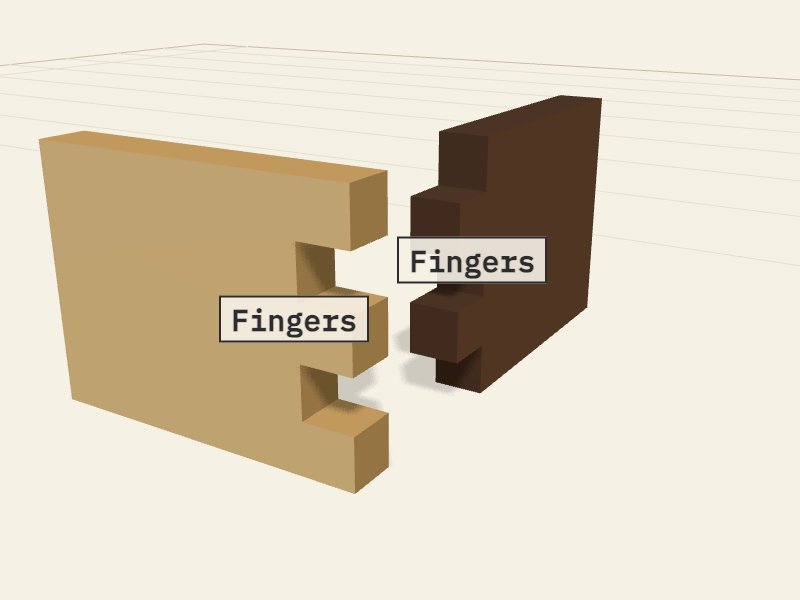
| Also called | finger joint, comb joint |
|---|
| Use | Box and drawer corners; a strong corner made with a jig. |
|---|
| Loads it resists | shear, racking |
|---|
| Strength in its family | high: Many long-grain glue faces on the finger cheeks. |
|---|
| Difficulty | intermediate |
|---|
| Tools | hand, power, CNC |
|---|
| Glue surface | long grain |
|---|
| Wood movement | Parts meet with their grain in the same direction, so they move together. |
|---|
| Typical proportions | Fingers of equal width; finger length equals the thickness of the mating part. |
|---|
| Looks | shown, on the front, side |
|---|
| Decorative options | contrasting woods for the two parts, finger width to suit the piece |
|---|
| KerfCraft draws it | yes, with Add joint… ▸ Box joint |
|---|
Edge joints
Tongue and groove
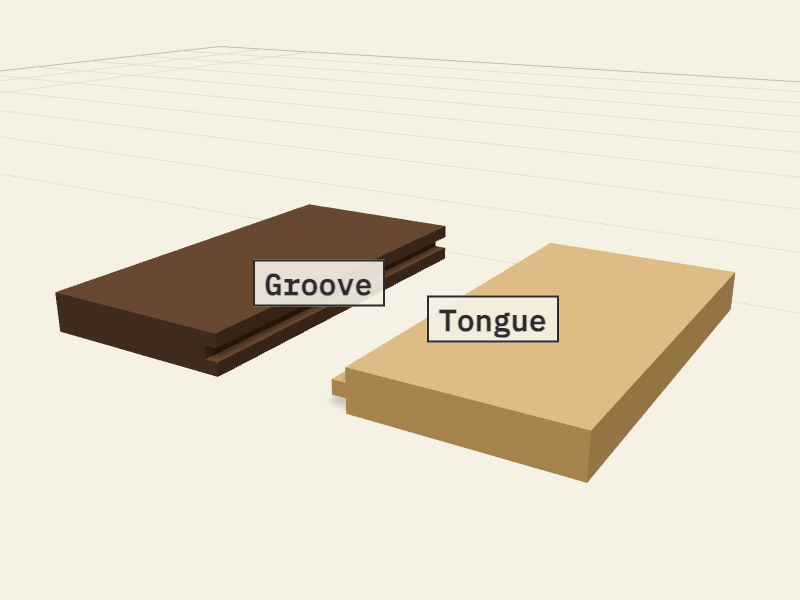
| Also called | T&G, tongue-and-groove |
|---|
| Use | Boards edge to edge: cladding, floors, boarded backs and panels. |
|---|
| Loads it resists | shear |
|---|
| Strength in its family | medium: Keeps the faces level and the boards in line; glued, it is long grain to long grain. |
|---|
| Difficulty | beginner |
|---|
| Tools | hand, power, CNC |
|---|
| Glue surface | long grain |
|---|
| Wood movement | For a boarded back or cladding, fit the boards dry so each board can move. |
|---|
| Typical proportions | Tongue about ⅓ of the board thickness. |
|---|
| Looks | hidden |
|---|
| Decorative options | a V-groove or bead on the joint line |
|---|
| KerfCraft draws it | yes, with Add joint… ▸ Tongue and groove |
|---|
Loose tongue
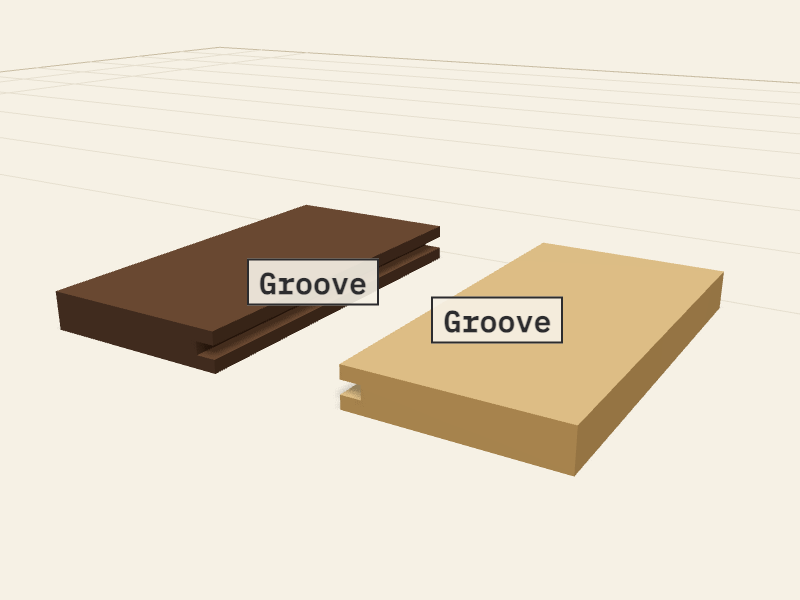
| Also called | spline joint, loose spline |
|---|
| Use | Edge joints and panels where both parts get a groove and a separate tongue goes between. |
|---|
| Loads it resists | shear |
|---|
| Strength in its family | medium: Long-grain glue faces on both sides of the tongue. |
|---|
| Difficulty | beginner |
|---|
| Tools | hand, power, CNC |
|---|
| Glue surface | long grain |
|---|
| Wood movement | Use plywood or a cross-grain solid tongue so it does not split. |
|---|
| Typical proportions | Tongue about ⅓ of the board thickness, centred. |
|---|
| Looks | hidden |
|---|
| Decorative options | none |
|---|
| KerfCraft draws it | yes, with Add joint… ▸ Loose tongue |
|---|
Butterfly key
| Also called | bowtie, dovetail key, butterfly |
|---|
| Use | Holds a crack or an edge joint closed in a slab or table top; often a feature. |
|---|
| Loads it resists | pull-out |
|---|
| Strength in its family | low: It stops a crack opening further; it is not a main joint. |
|---|
| Difficulty | intermediate |
|---|
| Tools | hand, power, CNC |
|---|
| Glue surface | mixed |
|---|
| Wood movement | Set the key grain across the crack; the slab can still move around it. |
|---|
| Typical proportions | Key about ⅓ to ½ of the slab thickness deep. |
|---|
| Looks | shown, on the top |
|---|
| Decorative options | contrasting wood for the key, keys on both faces |
|---|
| KerfCraft draws it | not yet |
|---|
Dovetails
Through dovetail
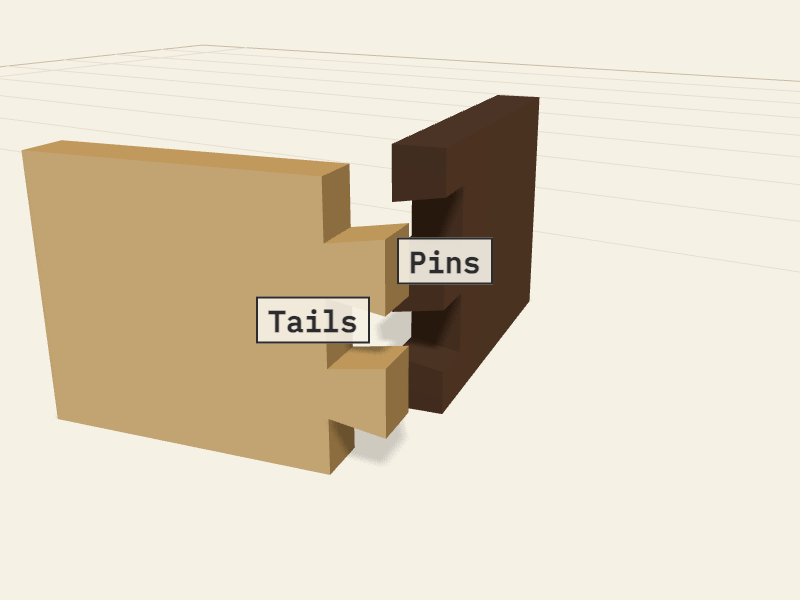
| Also called | through dovetails |
|---|
| Use | Box and carcass corners and drawer backs; often shown as a mark of hand work. |
|---|
| Loads it resists | pull-out, racking |
|---|
| Strength in its family | high: The tails lock against pull-out in one direction, with long-grain glue faces. |
|---|
| Difficulty | advanced |
|---|
| Tools | hand, power, CNC |
|---|
| Glue surface | long grain |
|---|
| Wood movement | Parts meet with their grain in the same direction, so they move together. |
|---|
| Typical proportions | Slope 1:6 (9.5°) in softwood, 1:8 (7.1°) in hardwood; cut with a router, the slope of the bit (through-dovetail jigs 7° to 10°). Tails as long as the pin board is thick. |
|---|
| Looks | shown, on the front, side |
|---|
| Decorative options | fine pins with wide tails ("London pattern"), even machine spacing, contrasting woods for the two parts |
|---|
| KerfCraft draws it | yes, with Add joint… ▸ Through dovetail |
|---|
Half-blind dovetail
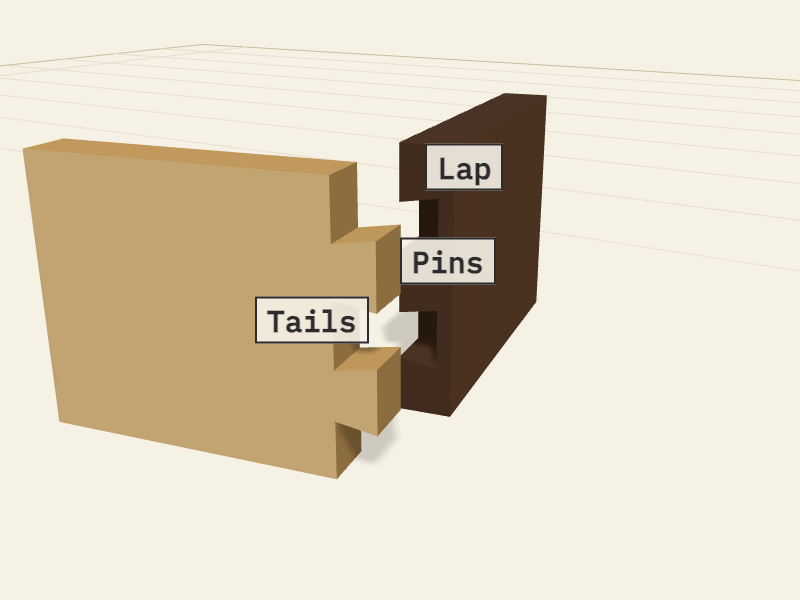
| Also called | lapped dovetail, half-lap dovetail |
|---|
| Use | Drawer fronts: the joint shows on the drawer sides, not the front. |
|---|
| Loads it resists | pull-out, racking |
|---|
| Strength in its family | high: The tails lock against the pull on the drawer front. |
|---|
| Difficulty | advanced |
|---|
| Tools | hand, power, CNC |
|---|
| Glue surface | long grain |
|---|
| Wood movement | Parts meet with their grain in the same direction, so they move together. |
|---|
| Typical proportions | Slope 1:6 (9.5°) in softwood, 1:8 (7.1°) in hardwood; cut with a router, the slope of the bit (half-blind jigs mostly 14°, 1:4). Leave a lap of about ¼ to ⅓ of the front thickness. |
|---|
| Looks | partly shown, on the side |
|---|
| Decorative options | fine pins with wide tails ("London pattern"), even machine spacing |
|---|
| KerfCraft draws it | yes, with Add joint… ▸ Half-blind dovetail |
|---|
Sliding dovetail
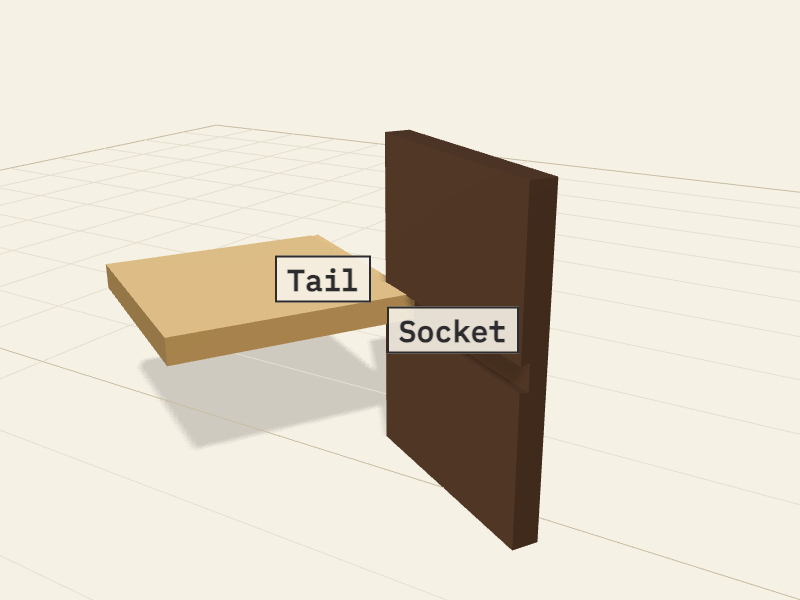
| Also called | dovetail housing, French dovetail |
|---|
| Use | Shelves and dividers into sides, rails into legs, battens under a top. |
|---|
| Loads it resists | pull-out, shear |
|---|
| Strength in its family | medium: Locks the parts across the joint, but it can slide out along its length if not glued or stopped. |
|---|
| Difficulty | advanced |
|---|
| Tools | hand, power, CNC |
|---|
| Glue surface | mixed |
|---|
| Wood movement | The grain of the two parts crosses. On a batten across a top, glue only the middle so the top can move. |
|---|
| Typical proportions | Socket about ⅓ of the host thickness deep; taper it for a tight fit at the end of the slide. |
|---|
| Looks | hidden |
|---|
| Decorative options | none |
|---|
| KerfCraft draws it | yes, with Add joint… ▸ Sliding dovetail |
|---|
Secret mitred dovetail
| Also called | mitred dovetail, full-blind dovetail |
|---|
| Use | Fine boxes and carcasses that must look like a plain mitre but hold like a dovetail. |
|---|
| Loads it resists | pull-out, racking |
|---|
| Strength in its family | high: Dovetails inside the mitre lock it against pull-out. |
|---|
| Difficulty | advanced |
|---|
| Tools | hand |
|---|
| Glue surface | long grain |
|---|
| Wood movement | Parts meet with their grain in the same direction, so they move together. |
|---|
| Typical proportions | Both parts the same thickness; a thin mitred lap covers the dovetails on both faces. |
|---|
| Looks | hidden |
|---|
| Decorative options | none |
|---|
| KerfCraft draws it | not yet |
|---|
Inserts and fixings
Screwed butt joint
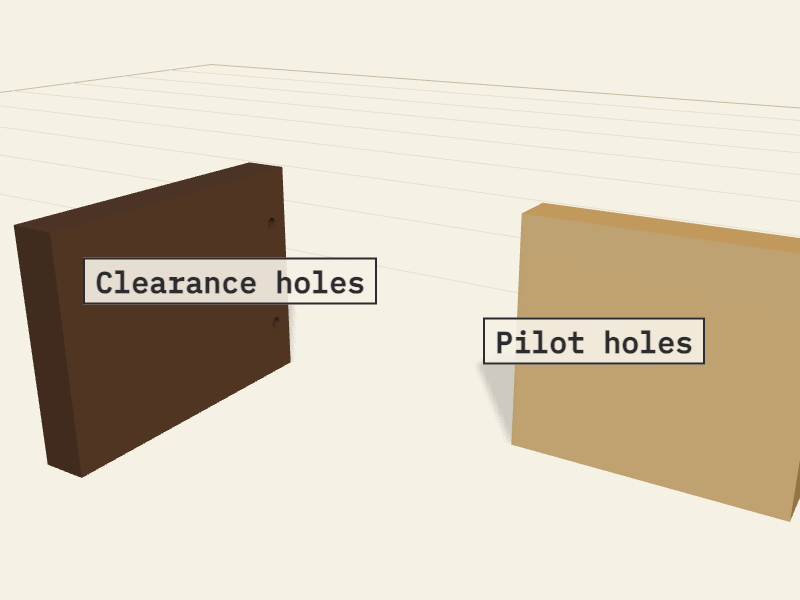
| Also called | screwed butt |
|---|
| Use | Quick carcass and workshop joints, sheet material, painted work. |
|---|
| Loads it resists | shear, pull-out |
|---|
| Strength in its family | medium: Screws pull the parts together, but a screw holds less well in end grain or in the edge of a board. |
|---|
| Difficulty | beginner |
|---|
| Tools | hand, power |
|---|
| Glue surface | mechanical |
|---|
| Wood movement | Screws let the parts move a little; slot the holes where a wide solid part crosses grain. |
|---|
| Typical proportions | Pilot and clearance holes; screws long enough to go well into the second part. |
|---|
| Looks | shown, on the side |
|---|
| Decorative options | screw heads under wood plugs |
|---|
| KerfCraft draws it | yes, with Add joint… ▸ Screwed butt |
|---|
Pinned butt joint
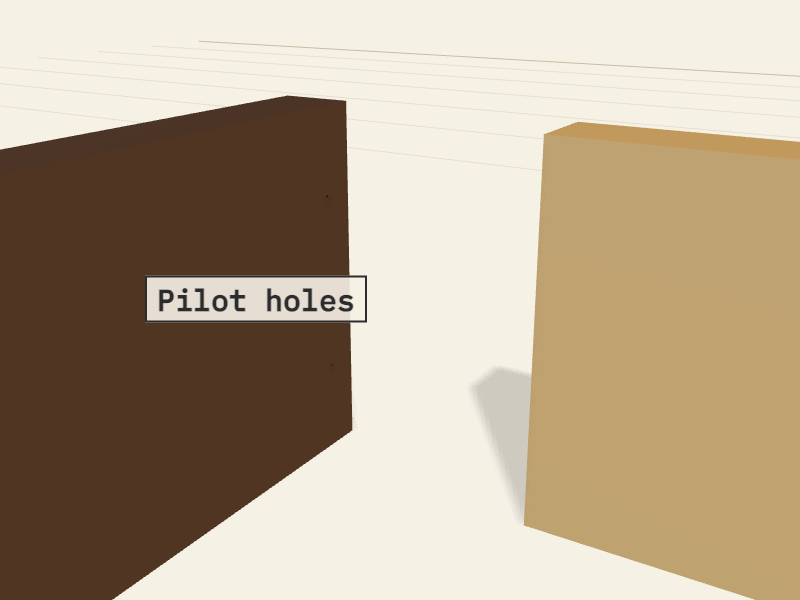
| Also called | nailed butt joint, brad-nailed butt |
|---|
| Use | Light boxes, backs and mouldings; pins hold glued parts while the glue sets. |
|---|
| Loads it resists | shear |
|---|
| Strength in its family | low: Pins hold little against pull-out. |
|---|
| Difficulty | beginner |
|---|
| Tools | hand, power |
|---|
| Glue surface | mechanical |
|---|
| Wood movement | Pins bend a little as the wood moves. |
|---|
| Typical proportions | Drive pins at opposite angles (dovetail nailing) so they hold better. |
|---|
| Looks | shown, on the side |
|---|
| Decorative options | pin holes filled to match |
|---|
| KerfCraft draws it | yes, with Add joint… ▸ Pinned butt |
|---|
Pocket screw joint
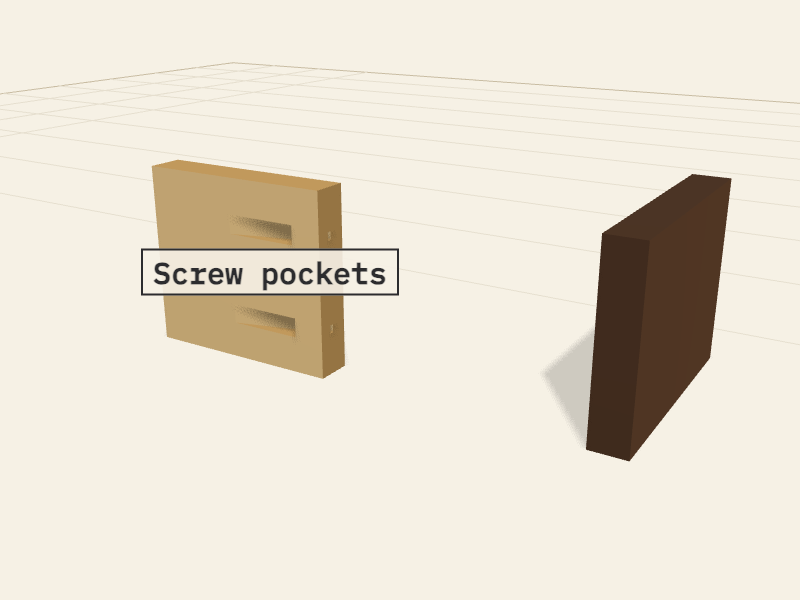
| Also called | pocket hole, pocket-hole joint |
|---|
| Use | Face frames, carcass rails and quick frames, with the pockets on a hidden face. |
|---|
| Loads it resists | shear, pull-out |
|---|
| Strength in its family | medium: The screw clamps the joint and goes into the other part at an angle; the glue face is small. |
|---|
| Difficulty | beginner |
|---|
| Tools | power |
|---|
| Glue surface | mechanical |
|---|
| Wood movement | The same as a screwed butt: keep them on narrow parts or where the grain runs the same way. |
|---|
| Typical proportions | The jig drills at a shallow angle (about 15°); use the screw the jig maker gives for the thickness. |
|---|
| Looks | hidden |
|---|
| Decorative options | plugs in the pockets if a face shows |
|---|
| KerfCraft draws it | yes, with Add joint… ▸ Pocket screw |
|---|
Cam fitting
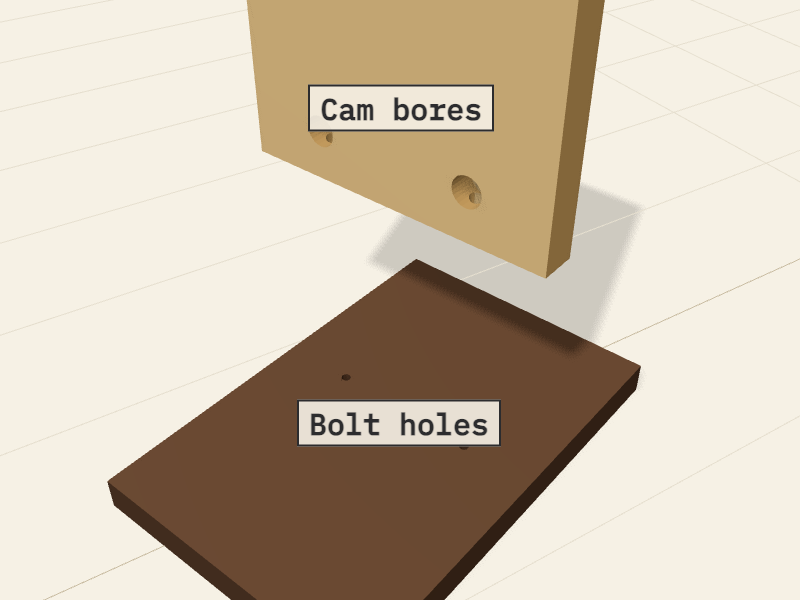
| Also called | cam lock, knock-down fitting, cam and bolt |
|---|
| Use | Flat-pack and knock-down carcasses: tops, bottoms and fixed shelves that come apart for a move. |
|---|
| Loads it resists | shear, pull-out |
|---|
| Strength in its family | medium: The cam pulls the bolt tight, but the bolt holds only by its thread in the side, and the joint has no glue. |
|---|
| Difficulty | beginner |
|---|
| Tools | power, CNC |
|---|
| Glue surface | mechanical |
|---|
| Wood movement | No glue, so the parts can move; tighten the cams again after a move. |
|---|
| Typical proportions | Cam bore on the hidden face, its centre a set distance from the end; use the drilling sheet for your fitting. |
|---|
| Looks | hidden |
|---|
| Decorative options | cam caps over the bores |
|---|
| KerfCraft draws it | yes, with Add joint… ▸ Cam fitting |
|---|
Biscuit joint
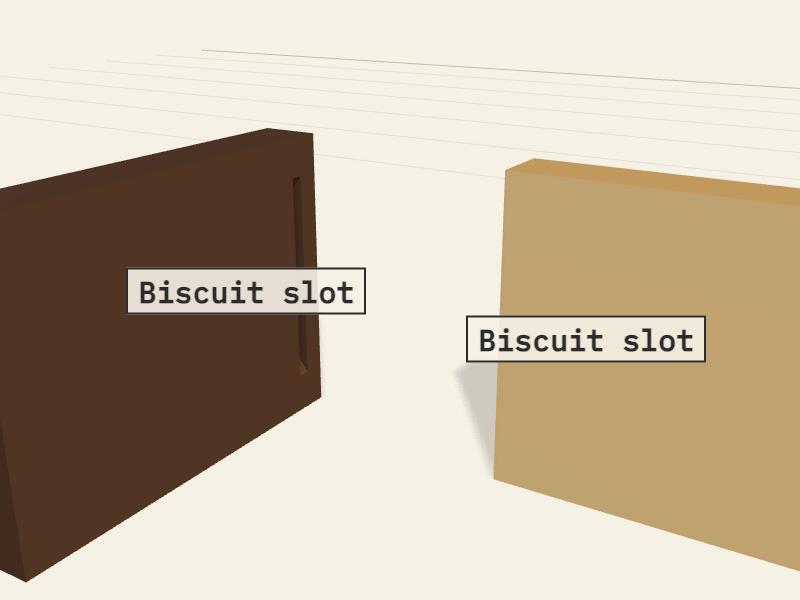
| Also called | plate joint |
|---|
| Use | Aligning edge joints and carcass panels; light corner joints. |
|---|
| Loads it resists | shear |
|---|
| Strength in its family | low: Biscuits mostly align the parts; the glue face is small. |
|---|
| Difficulty | beginner |
|---|
| Tools | power |
|---|
| Glue surface | mixed |
|---|
| Wood movement | Parts meet with their grain in the same direction, so they move together. |
|---|
| Typical proportions | Slot on the centre of the thickness; use the largest biscuit the part width takes. |
|---|
| Looks | hidden |
|---|
| Decorative options | none |
|---|
| KerfCraft draws it | yes, with Add joint… ▸ Biscuit |
|---|
Dowel joint
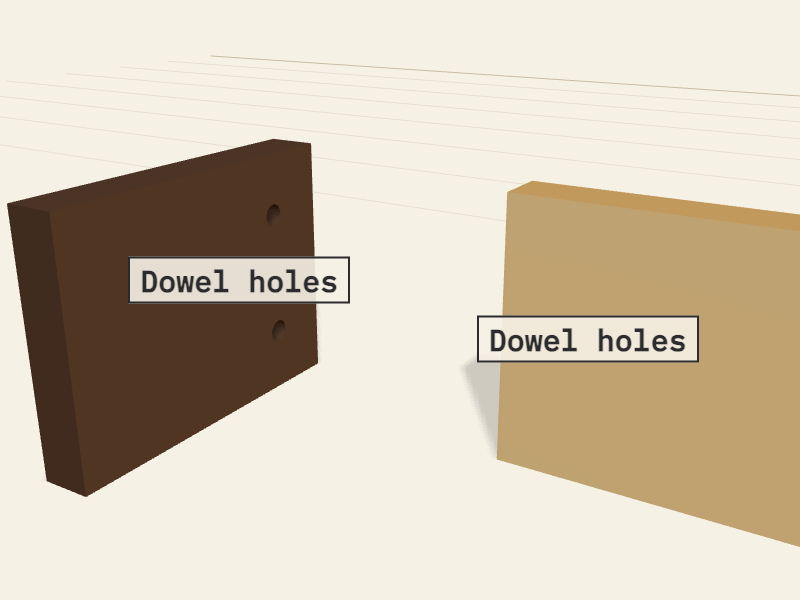
| Also called | dowelled joint, doweled joint |
|---|
| Use | Carcass panels, frames and edge joints, with round pegs in matching holes. |
|---|
| Loads it resists | shear, racking |
|---|
| Strength in its family | medium: Long-grain glue face on the dowels, but the holes must line up exactly. |
|---|
| Difficulty | beginner |
|---|
| Tools | hand, power, CNC |
|---|
| Glue surface | mixed |
|---|
| Wood movement | A row of dowels across wide solid parts restrains movement; keep it to narrow parts. |
|---|
| Typical proportions | Dowel diameter about ⅓ to ½ of the part thickness. |
|---|
| Looks | hidden |
|---|
| Decorative options | through dowels in a contrasting wood |
|---|
| KerfCraft draws it | yes, with Add joint… ▸ Dowel |
|---|
Domino joint
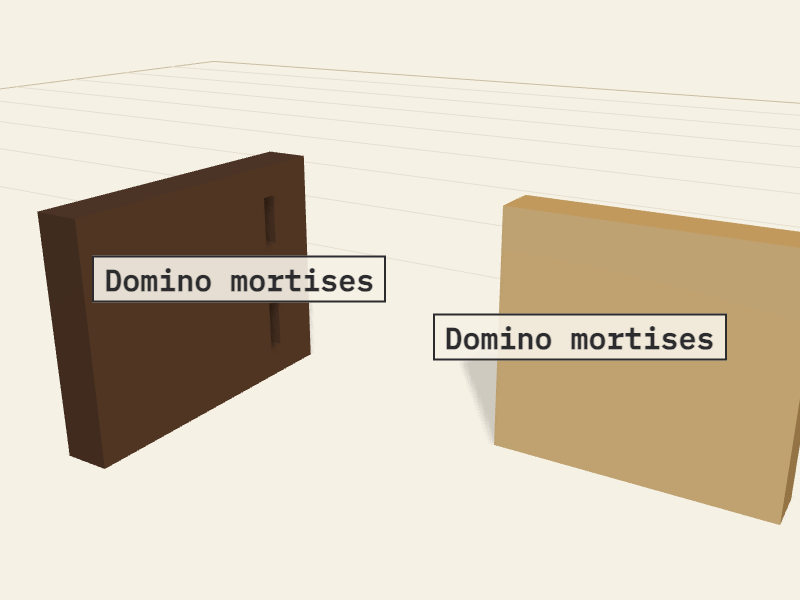
| Also called | loose tenon, floating tenon |
|---|
| Use | Carcass panels and frames: a loose flat tenon in two matching mortises. |
|---|
| Loads it resists | shear, racking, twist |
|---|
| Strength in its family | high: A flat tenon has more long-grain glue face than a dowel and resists twist. |
|---|
| Difficulty | beginner |
|---|
| Tools | power, CNC |
|---|
| Glue surface | long grain |
|---|
| Wood movement | The same as a mortise and tenon: keep wide cross-grain parts free to move. |
|---|
| Typical proportions | Tenon about ⅓ of the part thickness. |
|---|
| Looks | hidden |
|---|
| Decorative options | none |
|---|
| KerfCraft draws it | yes, with Add joint… ▸ Domino |
|---|