DOCS / EXPLANATION
Choosing a joint
Many joints can do the same job, so a joiner asks five questions. What loads does the joint take? How well does the glue hold? How does the wood move? How hard is it to make, and how does it look? The joints reference answers them for each joint.
The loads on a joint#
A joint can resist four kinds of load:
- Pull-out: a force that pulls the parts apart along the line of the joint, for example a drawer front when you open the drawer.
- Racking: a force that pushes a frame out of square, for example a chair that rocks.
- Shear: a force that slides one part across the other, for example the weight on a shelf.
- Twist: a force that turns one part round the joint, for example a wide rail in a door.
A housing holds a shelf well against shear, because the shelf sits on the shoulder of the housing. A dovetail holds a drawer front against pull-out, because the shape of the tails locks it.
Long grain and end grain#
Glue holds well between two long-grain surfaces, where the fibres lie along the surface. Glue holds poorly on end grain, where the cut ends of the fibres meet the surface. The Wood Handbook of the US Forest Products Laboratory explains why. Thus a glued butt joint or a plain mitre is weak, and a mortise and tenon is strong: its cheeks are long grain. Many joints add long-grain glue faces, for example a spline in a mitre or the fingers of a box joint.
Strength is relative#
KerfCraft does not give a strength number for a joint. Nobody has tested the joints in KerfCraft, and the strength of a real joint depends on the wood, the fit and the glue. Instead, the reference ranks each joint as low, medium or high against the other joints in its family, and gives the reason. For example, a drawbored tenon ranks high among frame joints, because the peg pulls the shoulders tight and holds against pull-out.
Wood movement#
Wood gets wider and narrower across the grain as the moisture in the air changes. It moves very little along the grain. If a joint glues two wide parts with their grain crossed, the wood cannot move, and the joint or the part can split. Thus a joiner keeps cross-grain glue joints narrow, glues a batten only at its middle, and leaves a solid panel loose in its groove. The reference gives a movement note for each joint.
Simple and advanced joints#
For most jobs there is a simple joint and an advanced joint. For example, you can screw a butt joint at a drawer front, or you can cut half-blind dovetails. The simple joint is quick and needs few tools. The advanced joint takes more skill and time, and it often lasts longer or looks better. Each joint in the reference has a difficulty: beginner, intermediate or advanced. It also names the tools that make it: hand tools, power tools or a CNC router.
Show the joint or hide it#
Some joints are there to be seen: through dovetails, through wedged tenons, keyed mitres, box joints and butterfly keys. A contrasting wood for the wedges, keys or pegs makes them a feature.
Other joints hide the join: blind mortise and tenons, stopped housings, dowels, dominoes and secret mitred dovetails. A half-blind dovetail shows on the side of a drawer, but not on the front. Shaker and Arts and Crafts furniture often shows its joints. Painted and modern furniture often hides them.
Drawer joints compared#
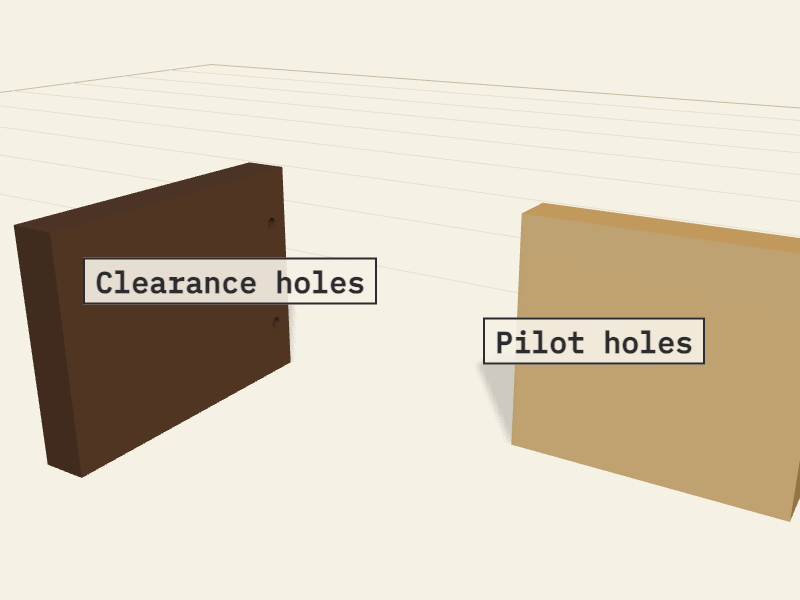
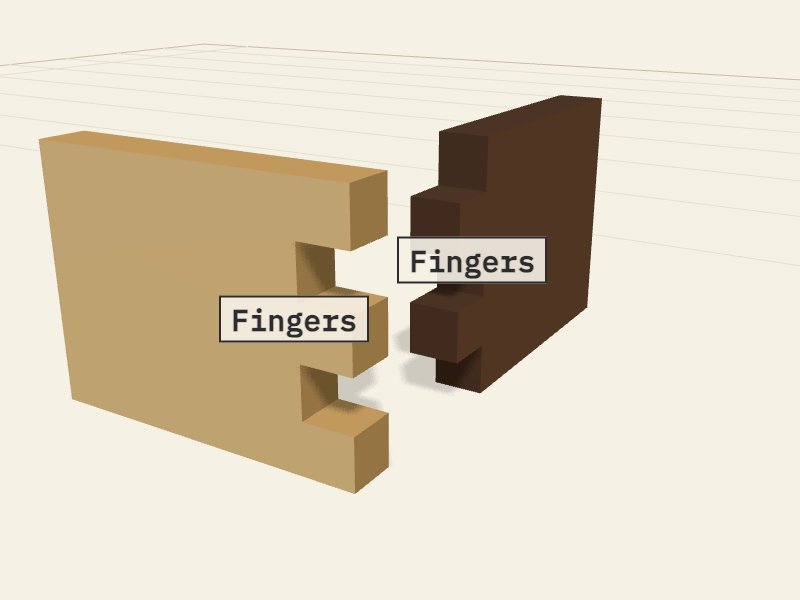
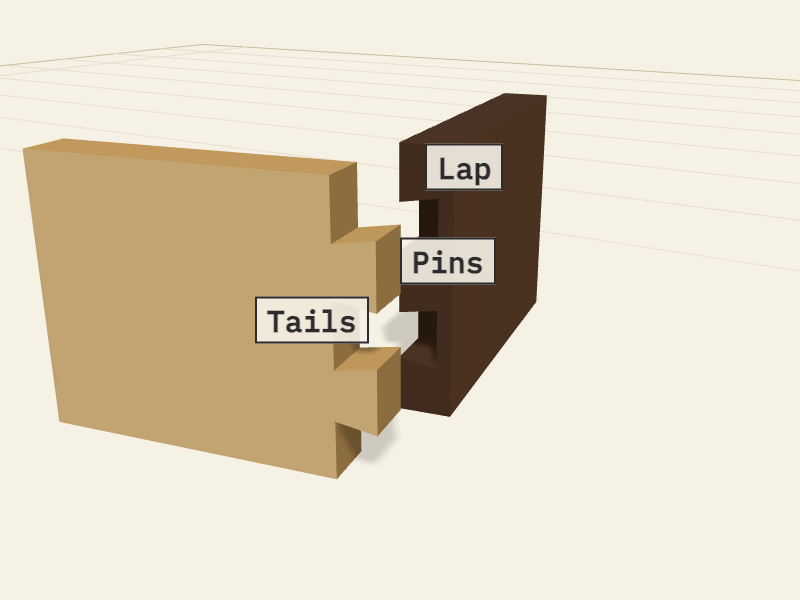
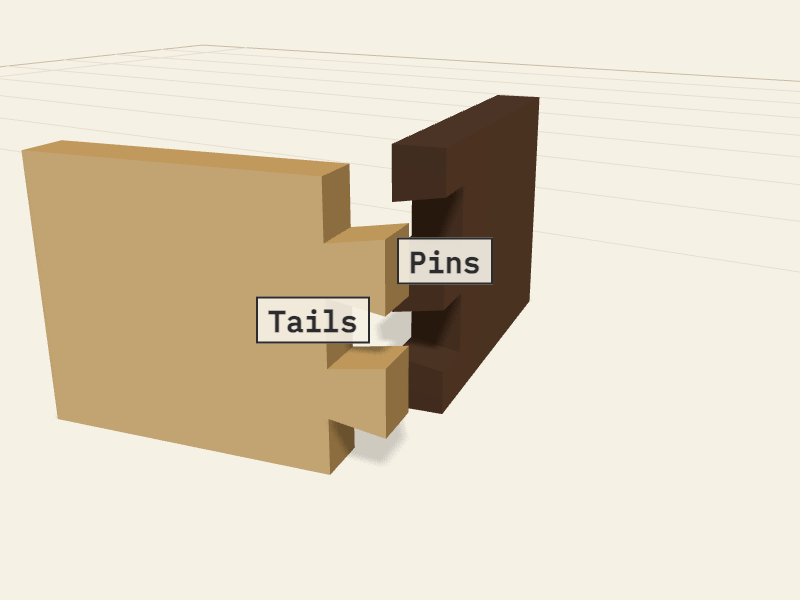
The same drawer corner, with eight joints that KerfCraft draws. Each front is 120 × 18 × 90 mm, and each side is 18 mm thick. Each picture shows the parts apart. The caption gives the looks and the difficulty from the joint table.
These joints show on the outside of the drawer:
These joints are hidden when the drawer is together:
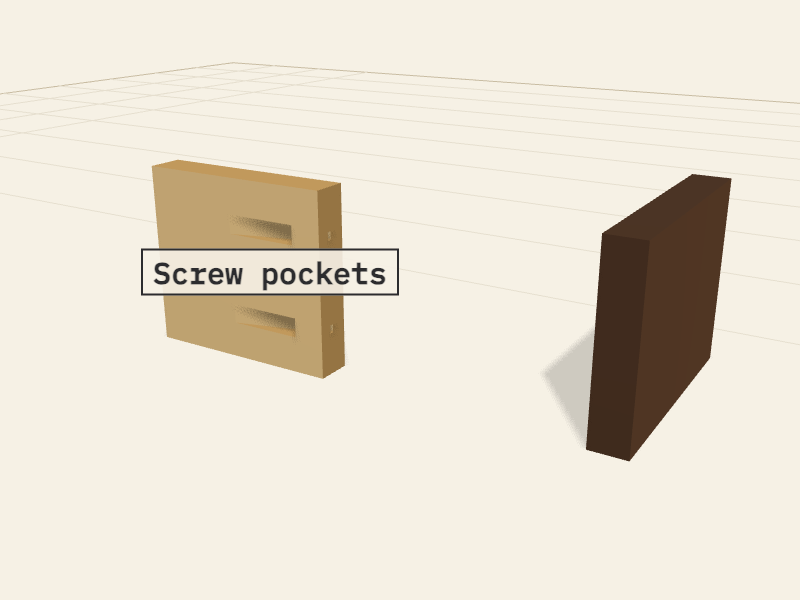
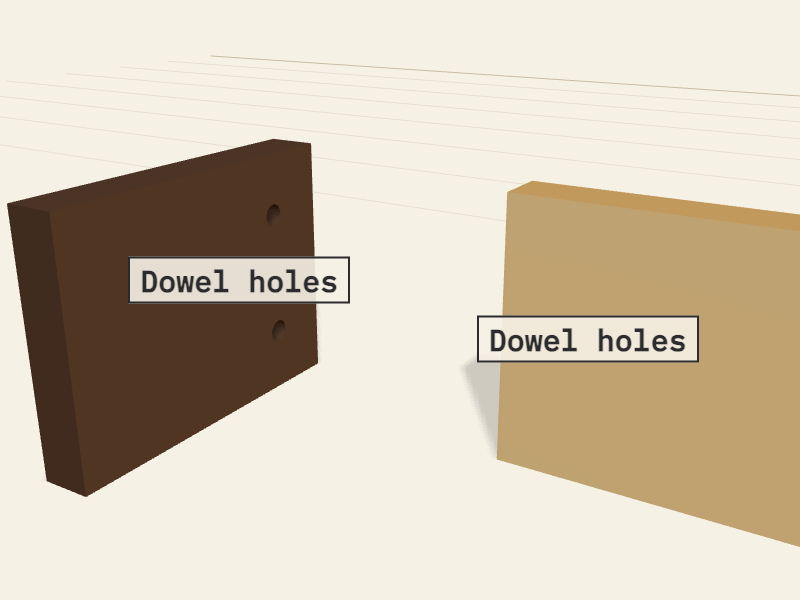
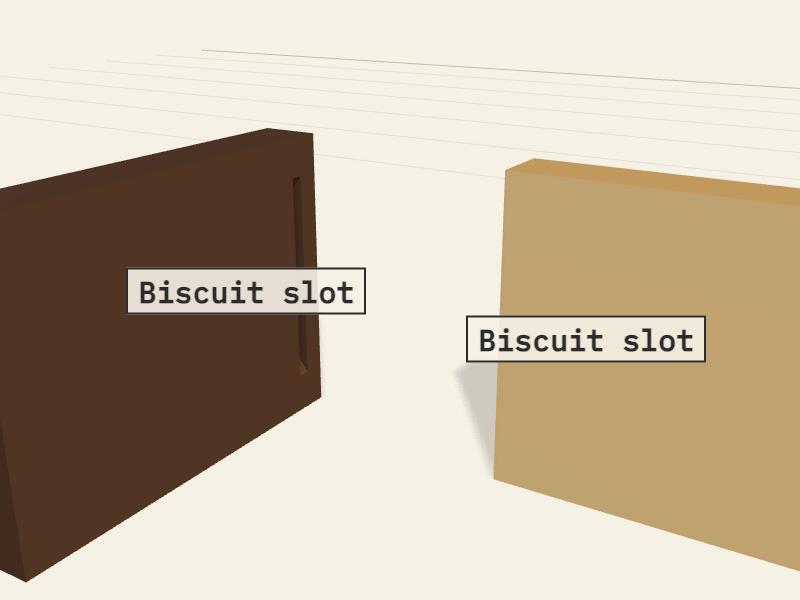
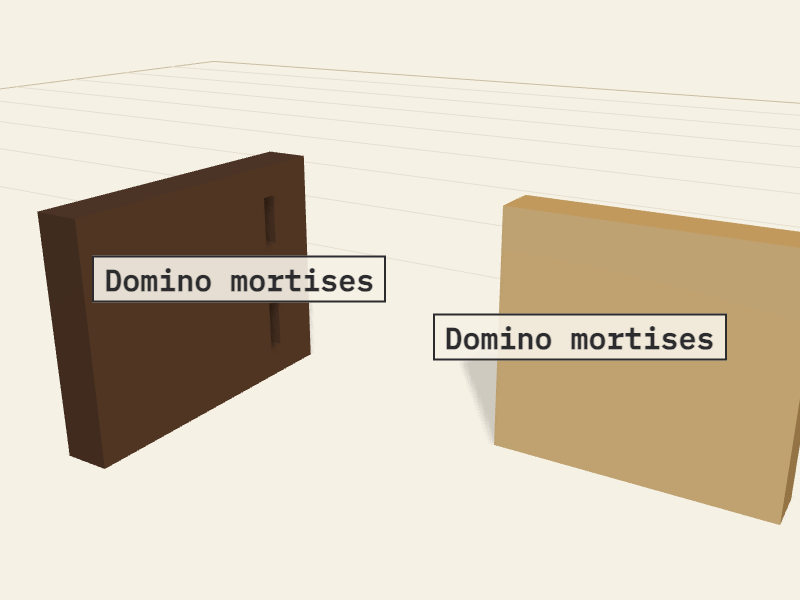
To examine the eight corners yourself, open the sampler in KerfCraft:
- Download the drawer joint sampler.
- In KerfCraft, click File ▸ Open file….
- Select the file drawer-joint-sampler.kerf.
The sampler opens as a new project. Select a part to read its joints in the Properties panel.
Ask the assistant#
The assistant uses the same table as the reference. If the choice is open, it offers a simple joint and an advanced joint, and asks which tools you have.
What KerfCraft draws now#
KerfCraft draws the frame, carcass, edge and box joints in Add joints, and the dovetails in Cut dovetails. The reference names the other joints so that you can plan them, but KerfCraft cannot draw them yet. If you ask for one of these joints, the assistant tells you, and offers the nearest joint that KerfCraft can draw.